
Our Roots
Heritage & Culture
Where every dish tells a story of heritage and tradition
The Story
A Culinary Voyage Through South India
Southern Spice draws its inspiration from the breathtaking landscapes, ancient monuments, and vibrant traditions of South India. Our cuisine is not merely food — it is a living connection to the cultures, peoples, and histories that have shaped this remarkable corner of the world.
Each illustration you see here adorns our walls. Each story shapes our menu. From the temple corridors of Rameswaram to the backwaters of Kerala — every flavour on your plate carries a geography and a memory.
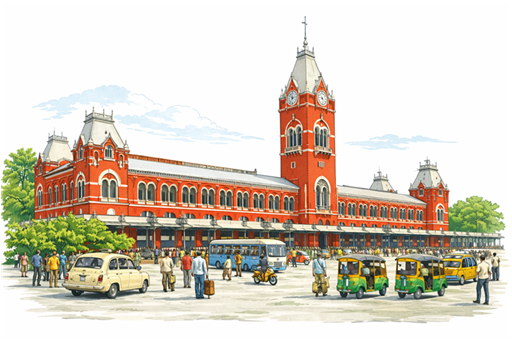
1873 · Gothic Revival Architecture
Chennai Central Railway Station
Standing proudly since 1873, Chennai Central is one of South India's most iconic landmarks. Designed in classic Gothic Revival architecture, its red-brick façade and tall clock tower have welcomed millions of travellers for over a century — a testament to the city's enduring spirit and grandeur.
Like this timeless station, our restaurant is a gateway — welcoming you to embark on a journey through South India's rich culinary heritage.
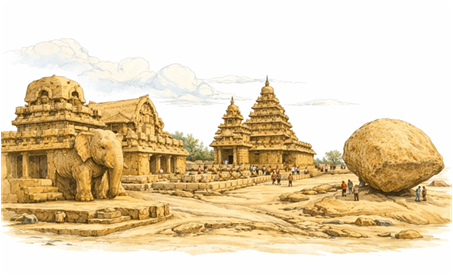
7th Century · UNESCO World Heritage Site
Mamallapuram
Along the shores of the Bay of Bengal stands Mahabalipuram, a 7th-century marvel built by the Pallava kings. Famous for its intricate rock-cut temples and magnificent Shore Temple, this ancient port town tells stories carved in stone — stories of devotion, artistry, and the sea.
Our dishes are carved with the same devotion — each flavour a deliberate stroke, each spice blend a sculpture in taste.
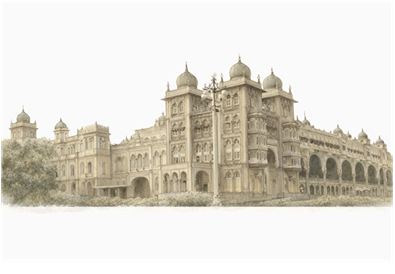
Wadiyar Dynasty · 1912
Mysore Palace
Mysore Palace is one of India's most magnificent royal residences. Built in 1912, its grand domes, intricate arches, and stained-glass ceilings reflect the opulence of the Wadiyar dynasty. Illuminated by thousands of lights during Dasara celebrations, the palace transforms into a glowing symbol of Karnataka's royal heritage.
Like this timeless landmark, our cuisine celebrates tradition, richness, and the vibrant flavours of South India.
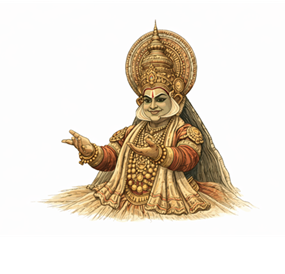
Kerala · 17th Century Classical Dance
Kathakali
With vibrant green faces, elaborate headgear, and expressive eyes, Kathakali is one of India's most dramatic classical dance traditions. Originating in Kerala in the 17th century, this art form combines storytelling, music, dance, and powerful facial expressions to bring ancient epics to life.
Every colour, gesture, and movement carries meaning — symbolising heroism, virtue, and emotion. Every dish on our menu tells a story just as vividly.
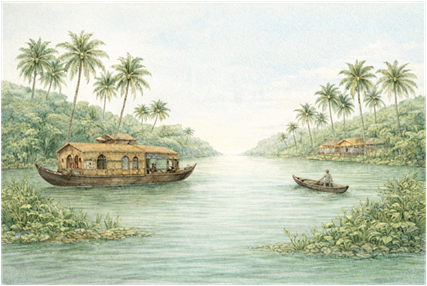
God's Own Country
Kerala Backwaters
A serene network of tranquil lagoons and winding canals, the Kerala Backwaters are a symbol of nature's quiet beauty. Fringed by swaying coconut palms and traditional houseboats, these waters reflect the slow, graceful rhythm of life in "God's Own Country."
The coconut-infused curries and delicate seafood of Kerala carry this same quiet grace — flavours that arrive gently and linger long.
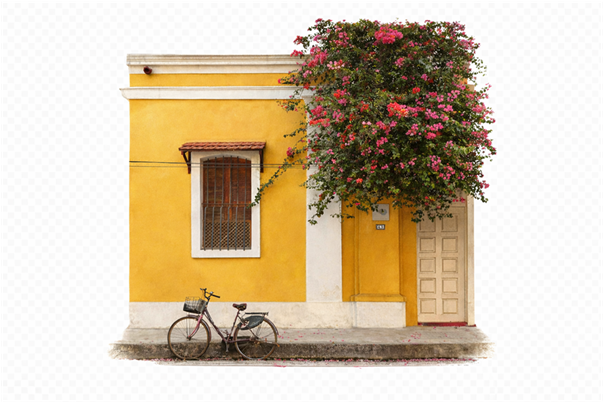
Colonial Heritage · Cultural Harmony
French Quarter, Puducherry
The French Quarter of Puducherry reflects a charming blend of Indian warmth and European elegance. Quiet streets lined with colonial villas whisper stories of a bygone era shaped by French influence. From sunlit courtyards to pastel façades, every corner carries timeless beauty and cultural harmony.
Our menu, too, is a harmonious blend — ancient South Indian tradition presented with contemporary flair, honouring roots while embracing the world.
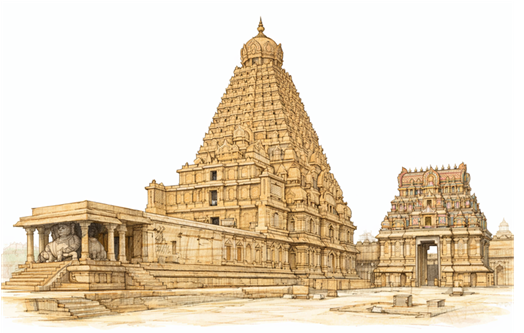
Chola Dynasty · 11th Century · UNESCO Heritage
Brihadeeswarar Temple
Standing tall for over a thousand years, the Brihadeeswarar Temple is a masterpiece of Chola architecture and devotion. Built by Raja Raja Chola I, this UNESCO World Heritage monument is carved entirely from granite, crowned by a majestic 66-metre vimana tower. Its grand corridors, intricate sculptures, and powerful presence reflect the artistic brilliance and spiritual depth of Tamil heritage.
Our Chettinad cuisine carries the same complexity and depth — built layer upon layer, spice upon spice, to create something truly monumental.
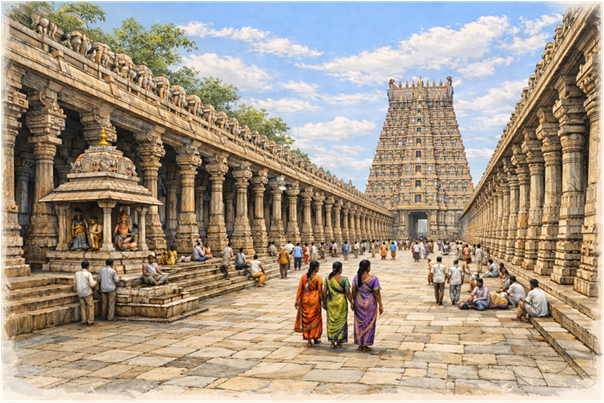
Rameswaram · Grand Corridors · 12th–17th Century
Ramanathaswamy Temple
The temple courtyard of Ramanathaswamy Temple is renowned for having one of the longest temple corridors in the world. Built with majestic stone pillars stretching over 1,200 metres, the symmetrical halls create a breathtaking perspective of light and shadow — a sacred procession through time.
A meal at Southern Spice is its own procession — from the first bite of amuse-bouche to the final spoonful of payasam, each course a pillar in a greater whole.